
Introduction
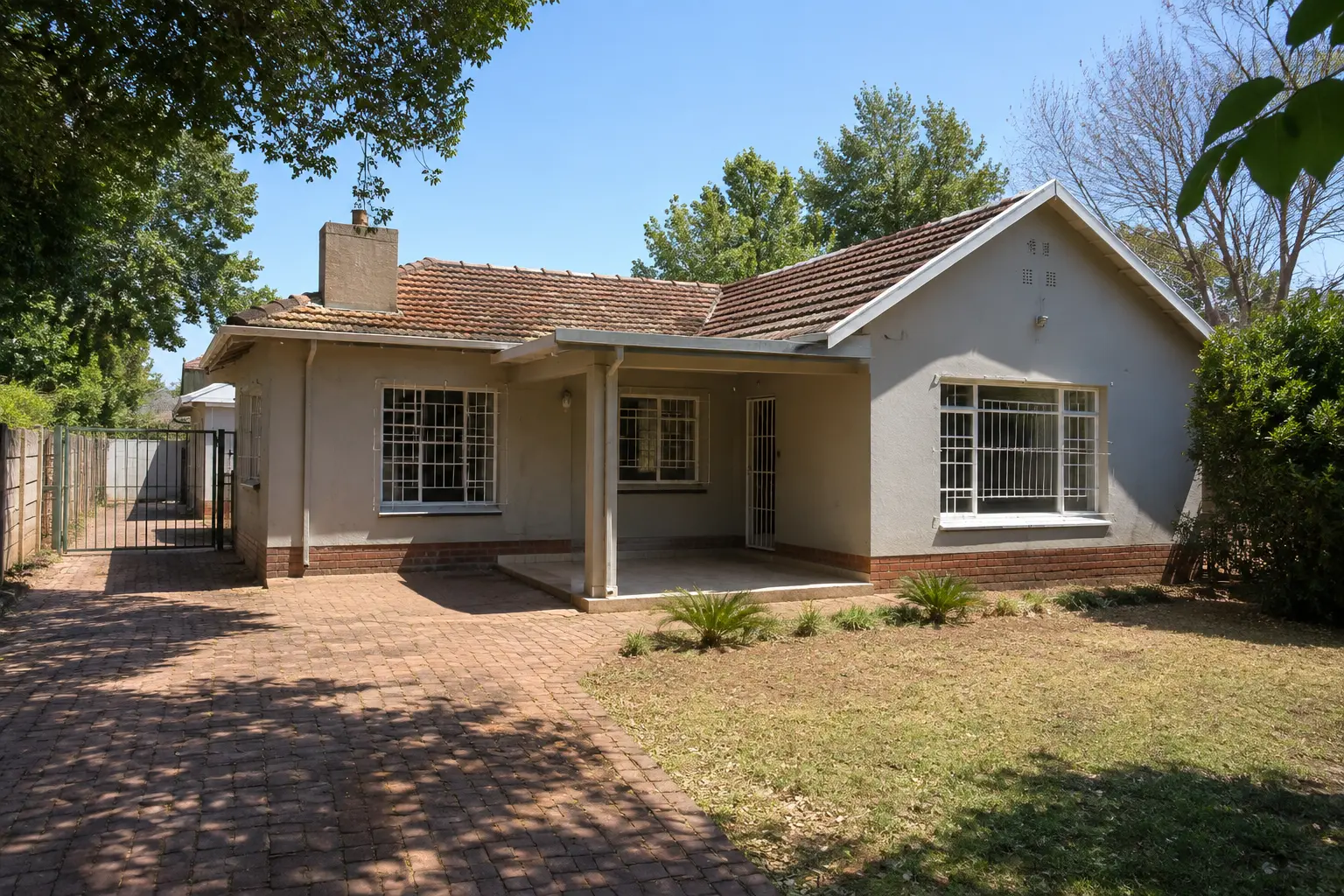
In South Africa, most residential purchases fall into one of two legal structures: freehold (a title deed to land and any buildings on it) or sectional title (an exclusive right to a section of a scheme, plus an undivided share of common property). The physical form usually follows: freehold typically means a free-standing house, and sectional title typically means an apartment, townhouse or duplex in a scheme.
The physical difference is obvious. The financial and governance difference is where buyers most often get caught out. A house gives you almost complete autonomy but concentrates every cost and risk on your title. An apartment socialises maintenance across owners but subjects you to a body corporate whose rules can shape how you live, let and renovate.
Before any specific price or suburb, decide which structure fits your goals. That single choice constrains everything downstream: rental strategy, exit horizon, insurance, tax and even the type of tenant you can attract.
Why it matters
Property is a long-hold, illiquid asset. The typical residential owner in South Africa holds a property for seven to twelve years, according to Lightstone's residential market data. That means a mismatch between structure and goal is not corrected quickly, it compounds. A house bought for its garden by a couple who then travel constantly turns into a maintenance headache. An apartment bought for capital growth in a scheme with weak reserves turns into a special-levy trap.
Getting this right also affects financing. Banks apply slightly different risk models to sectional title, sometimes offering marginally better rates on apartments because the building insurance and structural risk are pooled. But they will also decline schemes with poor financial health, or lend at a lower loan-to-value against them.
Core concepts: what you actually own
Freehold ownership is regulated by the Deeds Registries Act and vests a title deed in your name over an erf and its improvements. You are responsible for everything inside the boundary line, structure, roof, plumbing, electrical, garden, security, refuse.
Sectional title is regulated by the Sectional Titles Schemes Management Act (STSMA) and the Community Schemes Ombud Service Act. You own a section (measured on the sectional plan) plus a participation quota of the common property. A body corporate, every owner is automatically a member, runs the scheme through elected trustees and a managing agent. You are bound by the scheme's registered conduct and management rules, and you contribute a monthly levy to run the common property and build reserves.
| Attribute | Freehold house | Sectional title apartment |
|---|---|---|
| Legal framework | Deeds Registries Act | STSMA, CSOSA, scheme rules |
| Boundary of ownership | Whole erf and buildings | Interior of your section + share of common property |
| Governance | Owner only (plus HOA if in an estate) | Body corporate, trustees, managing agent |
| Monthly fixed costs | Rates, insurance you arrange, security you arrange | Rates + levy (includes insurance, cleaning, security, reserve) |
| Renovation freedom | Wide, subject to zoning & building plans | Interior yes; exterior needs trustee / special resolution |
| Short-term letting | Usually allowed by zoning | Often restricted or banned by conduct rules |
| Typical capital growth driver | Land value in the suburb | Node scarcity and building quality |
Running costs and cash flow
The cost profile of the two structures is fundamentally different. A house has lower fixed monthly running costs but higher irregular capital costs, a new roof, a repainted exterior, a replaced geyser. An apartment has higher fixed monthly costs (rates plus levy) but smoother capital costs because those are funded from the scheme's reserve.
For a typical R2.5m property in a metro suburb, the ownership cost profile might look like the table below. Numbers are indicative; always check the specific scheme's financials and the specific municipality's rates.
| Cost line | Freehold house | Sectional title apartment |
|---|---|---|
| Rates & taxes | R1,700 | R900 |
| Levy | n/a | R2,800 |
| Building insurance | R650 | Included in levy |
| Security (armed response, alarm) | R850 | Included in levy |
| Garden / pool service | R1,200 | Included in levy |
| Sinking fund provision (self-funded) | R2,000 | Included in levy |
| Estimated monthly total | R6,400 | R3,700 |
Rental strategy and letting rules
Rental strategy is where the two structures diverge most sharply. A free-standing house can generally accommodate long-term rental, short-term letting, executive rentals, room letting or owner occupation without third-party approval, subject only to municipal zoning. Sectional title schemes increasingly restrict some or all of these options through the conduct rules registered with the Community Schemes Ombud Service (CSOS).
- Short-term letting: many urban schemes now ban Airbnb-style use outright or impose minimum-stay rules of 30 or 60 nights.
- Pets: schemes may require trustee consent per animal, or ban pets above a certain weight.
- Renovations: any change to plumbing, electrical or an exterior wall typically requires trustee approval.
- Alterations to common property (adding a slatted screen, changing paving): need a special resolution.
Capital growth and long-term appreciation
Over long horizons, land value drives most residential appreciation. Free-standing houses in well-located suburbs therefore tend to outperform apartments on capital growth, because a larger share of the price is attributable to land. Lightstone's residential indices consistently show freehold outperforming sectional title over 10-year windows in most metro suburbs.
Apartments are not disadvantaged everywhere, though. In supply-constrained coastal and inner-city nodes, Sea Point, Green Point, Umhlanga, Rosebank, sectional title can match or exceed freehold growth because new stock is limited and demand is anchored to the node itself. Cash flow also tells a different story: a well-priced apartment often produces higher net yield than an equivalent-value house because the maintenance and vacancy profiles are smoother.
Freehold house
Stronger capital growth, higher maintenance drag, more flexible letting
Sectional title
Smoother net yield, capital growth concentrated in node scarcity, letting subject to scheme rules
Best practices before you buy
- Define your goal first: primary residence, buy-to-let, hybrid. Every downstream decision follows from this.
- For any sectional title purchase, request three years of levy statements, AGM minutes, the last two financial statements, the current reserve balance and the 10-year maintenance plan.
- For any freehold purchase, request municipal accounts, zoning certificate, approved building plans, any HOA rules, and compliance certificates.
- Model both cash flow and total cost of ownership over your planned hold period, not just the bond instalment.
- Stress-test the scenario: a 200bps rate rise, a two-month vacancy, a 20% special levy. If it still holds, you have a durable deal.
Common mistakes to avoid
- Falling in love with the unit and ignoring the scheme financials.
- Assuming an agent's verbal assurance about letting rules, read the registered conduct rules.
- Underestimating maintenance on a freehold home older than 20 years. Budget 2 to 4% of value per year.
- Ignoring the difference between exclusive-use areas (yours to use but not owned) and sections (owned outright) on a sectional title purchase.
- Buying based on gross yield alone; net yield after all real costs is the number that matters.
Practical example
Consider two R2.5m properties in the same broader area, an apartment in an established scheme, and a small three-bedroom freehold house 3km away. Both let for around R18,500 per month.
| Line item | Freehold house | Apartment |
|---|---|---|
| Gross rental income (12 months) | R222,000 | R222,000 |
| Vacancy allowance (1 month) | -R18,500 | -R18,500 |
| Rates & taxes | -R20,400 | -R10,800 |
| Levies | n/a | -R33,600 |
| Insurance & security | -R18,000 | Included in levy |
| Maintenance provision | -R25,000 | -R6,000 |
| Letting commission (8%) | -R16,300 | -R16,300 |
| Net operating income | R123,800 | R136,800 |
| Net yield on R2.5m | 4.9% | 5.5% |
The apartment wins on cash flow. The house is likely to win on capital growth over ten years. Neither is universally better, the right answer depends on whether you need the yield now or the appreciation later.
Frequently asked questions
The most common questions we field on this comparison are covered in the FAQ section below the article. In short: apartments are not automatically worse investments, houses are not automatically better, and the scheme rules matter as much as the unit itself.
Conclusion
Freehold and sectional title are two different businesses wearing the same label. Freehold gives you control and long-run capital growth in exchange for concentrated risk and hands-on operation. Sectional title gives you smoother cash flow and shared risk in exchange for governance you do not control and letting rules you must live with. Choose the structure that matches your goal, not the one that matches your emotion at the show day.
Professional tips
- • Ask for three years of levy statements, AGM minutes and financials before signing an OTP on any sectional title unit.
- • For a free-standing home, request the seller's rates and utilities accounts and check for any hidden arrears.
- • Model both options against your real income target before you fall in love with either.
Common mistakes to avoid
- • Buying an apartment in a scheme with a depleted reserve fund and being surprised by a special levy in year two.
- • Assuming a free-standing home in a good suburb always beats an apartment, it depends on your goal.
- • Ignoring pet, letting and renovation rules until after transfer.
Frequently asked questions
Do apartments really grow in value slower than houses?+
Can I renovate my apartment?+
Are apartment levies tax deductible?+
Key takeaways
- Structure follows goal, decide use case before you choose freehold or sectional title.
- Freehold usually wins on 10-year capital growth; sectional title often wins on monthly net yield.
- Scheme financial health (reserve fund, arrears, 10-year plan) matters as much as the unit itself.
- Conduct rules control letting strategy, read them before you sign, not after.
- Stress-test cash flow against a rate rise, a vacancy and a special levy before committing.
Model it for your property
Run the numbers with our free calculators.
References
About the author
BookingLoop Advisory
Property investment desk
BookingLoop's advisory team works with residential investors, guesthouse operators and hospitality developers, structuring acquisitions, financing and letting operations for real cash-flow outcomes.
Published 4 March 2025 · Last updated 18 June 2026
Not sure which route fits your goals?
Book an advisory call. We will model both options against your budget, target income and time horizon before you make an offer.
Related guides
Understanding Levies in Sectional Title Schemes
What levies actually cover, why they rise, how reserve funds work under STSMA, and the questions every buyer should ask before signing.
Read guide InvestmentRental Property Investment Guide for South Africa
Gross yield, net yield, cash flow, vacancy risk and the ownership costs most first-time investors miss, with a full worked example.
Read guide BuyingThe Complete Property Due Diligence Checklist
The inspections, documents, zoning checks and financial verifications that separate a smart buy from an expensive lesson.
Read guide